


Introduction
Technology is changing quickly, and programming is still one of the most useful talents in 2026. Learning object-oriented programming languages is one of the best things you can do if you want to learn how to code. OOP languages are used a lot in making software, web apps, mobile apps, games, business systems, and more.
This in-depth tutorial will help people who are new to OOP understand what it is, why it matters, and which languages are ideal to learn in 2026. There is also a comparison table, useful code snippets, and career advice to help you make the proper pick.
What is Object-Oriented Programming?
Object-Oriented Programming (OOP) is a way of programming that is built on the idea of “objects.” These objects have both data (attributes) and functions (methods). OOP is different from procedural programming since it focuses on modeling real-world things instead of functions and sequences.
Object oriented programming languages are very important for modern software development because they make code more organized, reusable, and scalable.
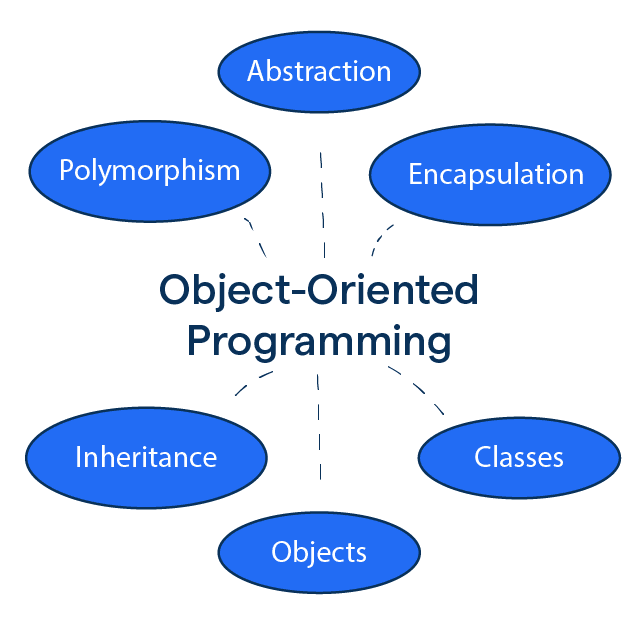
Basic Ideas of Object-Oriented Programming
It’s crucial to know the four main ideas behind OOP before you pick a language:
1. Putting things together
Encapsulation implies putting data and the methods that work on it into a single unit, or class. It also limits direct access to some parts.
2. Getting things from your parents
Inheritance lets one class take on the properties and methods of another class, which makes it easier to reuse code.
3. Polymorphism
Polymorphism lets objects act differently in different situations, even if they have the same method name.
4. Abstracting
Abstraction hides complicated implementation details and only reveals the most important ones.
These rules constitute the foundation of all the most popular object oriented programming languages in use today.
Why Newbies Should Learn OOP in 2026
Companies put a lot of value on software systems that can grow and be fixed in 2026. OOP gives:
• Organizing code in a structured way
• Better fixing and debugging
• Parts that can be used again
• A lot of demand in the industry
Most production-level apps are made with object-oriented programming languages, from small businesses to big companies.
The Best Object Oriented Programming Languages for Beginners in 2026
Let’s have a look at the most popular programming languages for beginners in the computer field.
1. Python: Easy to use and powerful
A lot of the time, newbies choose Python first. Its straightforward syntax is similar to English, which makes it easy to read and write.
Why Use Python?
• Simple syntax
• A lot of support from the community
• Used in web development, AI, data science, and automation
• A lot of libraries
Example of Python OOP:
def __init__(self, name):
self.name = namedef say_hello(self):
return f”Hello, I am {self.name}”s = Student(“Rahul”)
print(s.say_hello())
Python is one of the easiest object oriented programming languages for beginners to learn.
2. Java is not tied to any one platform
For decades, Java has been the most important language for making software.
Why should you choose Java?
• WORA: Write Once, Run Anywhere
• Very object-oriented
• Used a lot in business systems
• Help with Android development
Java OOP Example:
String model;Car(String model) {
this.model = model;
}void show() {
System.out.println(“Car model: ” + model);
}
}
In business settings, Java is one of the most popular object-oriented programming languages.
3. C++ — A Strong Base
C++ is a strong programming language that focuses on performance. It’s a great way to learn about memory management and basic programming ideas.
Why C++?
• Great performance
• Used in programming for games and systems
• Teaches basic ideas
• Strong use of OOP
C++ OOP Example:
using namespace std;class Animal {
public:
void speak() {
cout << “Animal speaks” << endl;
}
};
C++ is great for people who wish to learn more about how object-oriented programming languages work.
4. C# is great for making games and apps
Microsoft produced C# and it is often used with the .NET framework.
Why C#?
• Syntax that is clean and up-to-date
• Common in making apps for Windows
• In the Unity game engine
• Good support for OOP
C# is still one of the object oriented programming languages that is growing in 2026.
5. JavaScript: Object-Oriented Programming for the Web
The modern web runs on JavaScript. It starts out as procedural, yet it fully supports OOP ideas.
Why should you use JavaScript?
• Important for building the front end
• Used with Node.js on the back end
• Big ecosystem
• A lot of jobs available
JavaScript shows that object oriented programming languages can be used for more than just traditional software; they can also be used to make web apps.
6. Ruby: Simple and beautiful for beginners
Ruby is known for being easy to use and having a clean syntax.
Why Ruby?
• Code that is clean and easy to read
• Easy for beginners
• Ruby on Rails is a popular web development tool
• Design that is purely object-oriented
Ruby is an excellent way to start learning how to program with objects.
A Table of the Best Languages (2026)
| Language | Level of Difficulty | Performance | Best For | Job Demand in 2026 |
|---|---|---|---|---|
| Python | Easy to Medium | Medium | AI, Web, Data Science | Very High |
| Java | Medium | High | Enterprise, Android | Very High |
| C++ | Hard | Very High | Game Dev, Systems | High |
| C# | Medium | High | Game Dev, Windows Apps | High |
| JavaScript | Easy-Medium | Medium | Web Development | Very High |
| Ruby | Easy | Medium | Web Apps | Moderate |
This comparison helps those who are new to programming find the proper object-oriented programming languages for their needs.
A Code that Shows How OOP Works
Here’s a simple example of how inheritance and polymorphism work in Python:
def sound(self):
print(“Animal makes a sound”)class Dog(Animal):
def sound(self):
print(“Dog barks”)a = Animal()
d = Dog()a.sound()
d.sound()
This example highlights how different object oriented programming languages use similar ideas but have significantly different syntax.
How to Pick the Best OOP Language
-
Pick Python if you want things to be easy.
-
Choose Java if you want a job in business.
-
If you want to make games, pick C++ or C#.
-
If you want to work on the web, choose JavaScript.
-
Choose Ruby if you want clean syntax.
You should choose whatever object oriented programming language to start with based on your professional goals.
Jobs in 2026
Learning OOP lets you become:
• Developer of Software
• Engineer for the Back End
• Developer of Mobile Apps
• Game Maker
• Cloud Engineer
• Data Scientist
Job descriptions for most tech organizations say that you need to know how to program in object oriented programming languages.
Advantages of Learning OOP
• Reusing code
• Better Structure for Projects
• Debugging is easier
• Very scalable
• Standard Practice in the Industry
Object oriented programming languages are still useful and powerful, even when new paradigms come up.
Things that Beginners Often Do Wrong
• Not paying attention to basic OOP ideas
• Learning syntax without knowing how to use it
• Staying away from initiatives in the real world
• Changing languages too often
Before moving on to another object oriented programming language, be sure you know how to use one of the main ones.
Conclusion
In 2026, learning how to code isn’t just a trend; it’s an investment in your career. Beginners can get a good start in software development by picking one of the top object oriented programming languages.
The most important thing is to practice consistently, no matter if you start with Python for its ease of use, Java for its strength in business, C++ for its speed, C# for gaming, JavaScript for the web, or Ruby for its beauty.
Get a good grasp of the basics, work on real projects, and really comprehend the ideas. It gets a lot easier to transition between object oriented programming languages if you understand the basics of OOP.
If you really want to be a developer in 2026, start learning one language today, practice every day, and grow your portfolio little by little.